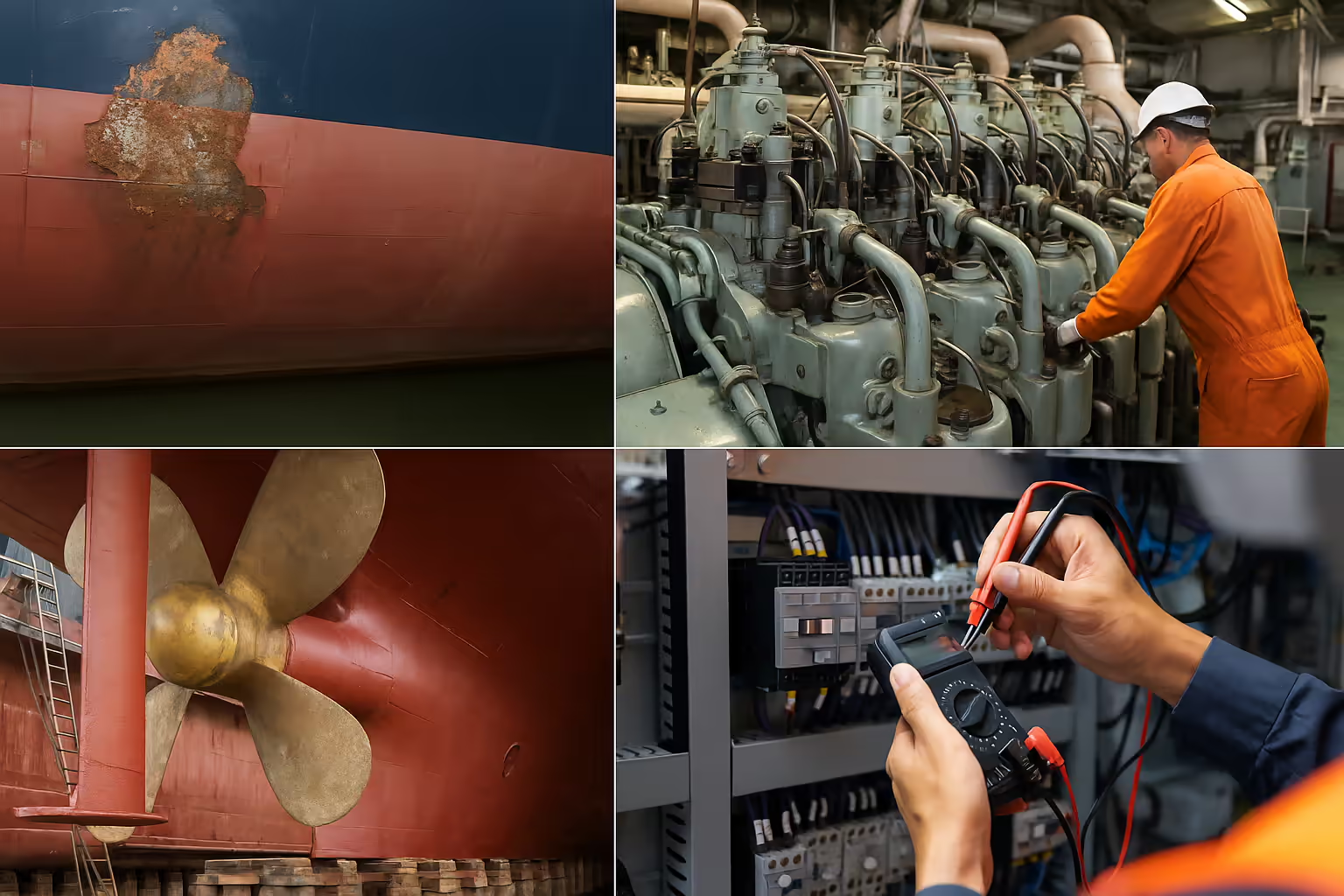
As the maritime industry becomes more competitive and cost-sensitive, ship operators are under pressure to minimize downtime and maximize operational efficiency. Traditional repair methods, while still effective, are being increasingly complemented—and in some cases, replaced—by advanced technologies that make ship maintenance and repair faster, safer, and more precise.
In this article, we explore how modern technology is transforming the ship repair landscape.
1. Predictive Maintenance Through IoT and Sensors
One of the most significant advances in ship maintenance is the use of IoT (Internet of Things) devices and smart sensors. These tools continuously monitor critical systems such as engines, pumps, and electrical panels.
Benefits:
- Detect potential failures before they occur
- Reduce unplanned repairs
- Optimize maintenance schedules
- Lower overall repair costs
With predictive data, shipowners can plan dock time in advance, ensuring parts and personnel are ready—reducing turnaround time significantly.
2. Remote Inspection Using Drones and ROVs
Drones and Remotely Operated Vehicles (ROVs) have revolutionized the inspection process. These technologies allow engineers to assess areas that are difficult, dangerous, or time-consuming to access manually, such as:
- Hulls and underwater structures
- Ship tanks and ballast compartments
- Superstructures at height
Using drones or ROVs reduces the need for scaffolding or dry docking and significantly improves safety for the crew and inspectors.
3. Augmented Reality (AR) and Digital Twins
Augmented Reality (AR) and digital twin technology are now being used to simulate repair procedures and identify structural issues in real-time. By overlaying technical data on a real-world view, technicians can:
- Visualize the internal structure without disassembly
- Access real-time schematics
- Train crews on repair tasks virtually before executing them physically
Digital twins—virtual replicas of physical assets—allow for condition-based analysis, giving ship managers insights into component health over time.
4. 3D Printing for Spare Parts
In remote locations or during urgent repair needs, 3D printing can manufacture specific ship components on-site, reducing the wait time for delivery of spare parts.
Applications include:
- Impellers
- Valves
- Gaskets
- Custom fittings
This not only speeds up the repair process but also reduces inventory costs and waste.
5. Automated Welding and Robotics
Advanced shipyards now use automated welding systems and robotic arms for precision repair work. These tools provide:
- Consistent and high-quality welds
- Faster turnaround for structural repairs
- Enhanced safety by minimizing human exposure to high-risk environments
Robotics are particularly useful in repetitive tasks or in confined spaces where manual labor is hazardous or inefficient.
The integration of modern technologies into ship repair operations is no longer optional—it’s a strategic necessity. Tools like IoT, drones, AR, 3D printing, and automation not only improve repair efficiency but also enhance safety, reduce operational costs, and extend the lifespan of vessels.
In the future, we can expect even more advanced innovations such as AI-driven diagnostics, blockchain-based maintenance records, and autonomous repair bots to redefine the standard of ship repair. Embracing these changes today gives maritime operators a competitive edge in tomorrow’s oceans.